rose schmiedeknecht
home
about
gallery
contact
\ \
senti
the problem
Retail employees are expected to balance operational tasks with constant customer interaction— often under high-pressureworking conditions.Research revealed that:
overview
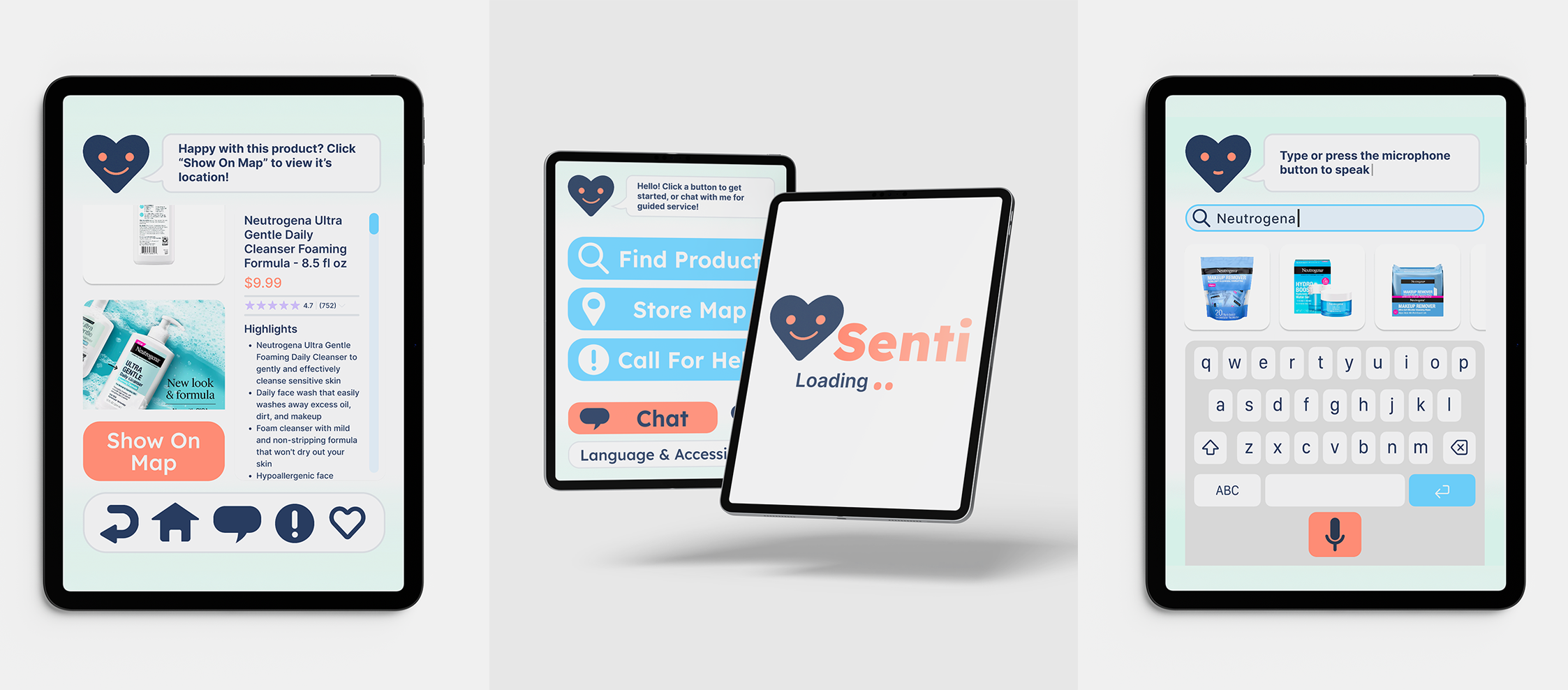
Senti is an AI-driven self-service application designed to reduce employee burnout in large-scale retail environments by automating routine customer interactions.
Focus— AI integration, service design, accessibility
This creates a feedback loop:overworked employees → lower-quality interactions → decreased customer satisfaction
- Type: UX/UI, Product Design
- Context: Academic project
- Role: Research, Concept, Final execution
- Tools: Figma
- Customer service expectationssignificantly contribute toemployee burnout
- High task volume reduces both storequality and service quality
- Employees struggle to maintain emotional responsiveness while completing physical work

the opportunity
Most existing research focuses on improving human-to-human service interactions. Fewer solutions explore how technology can redistribute emotional labor rather than intensify it.
This project asks:
What if routine customer interactions could be offloaded—withoutremoving human support entirely?
concept
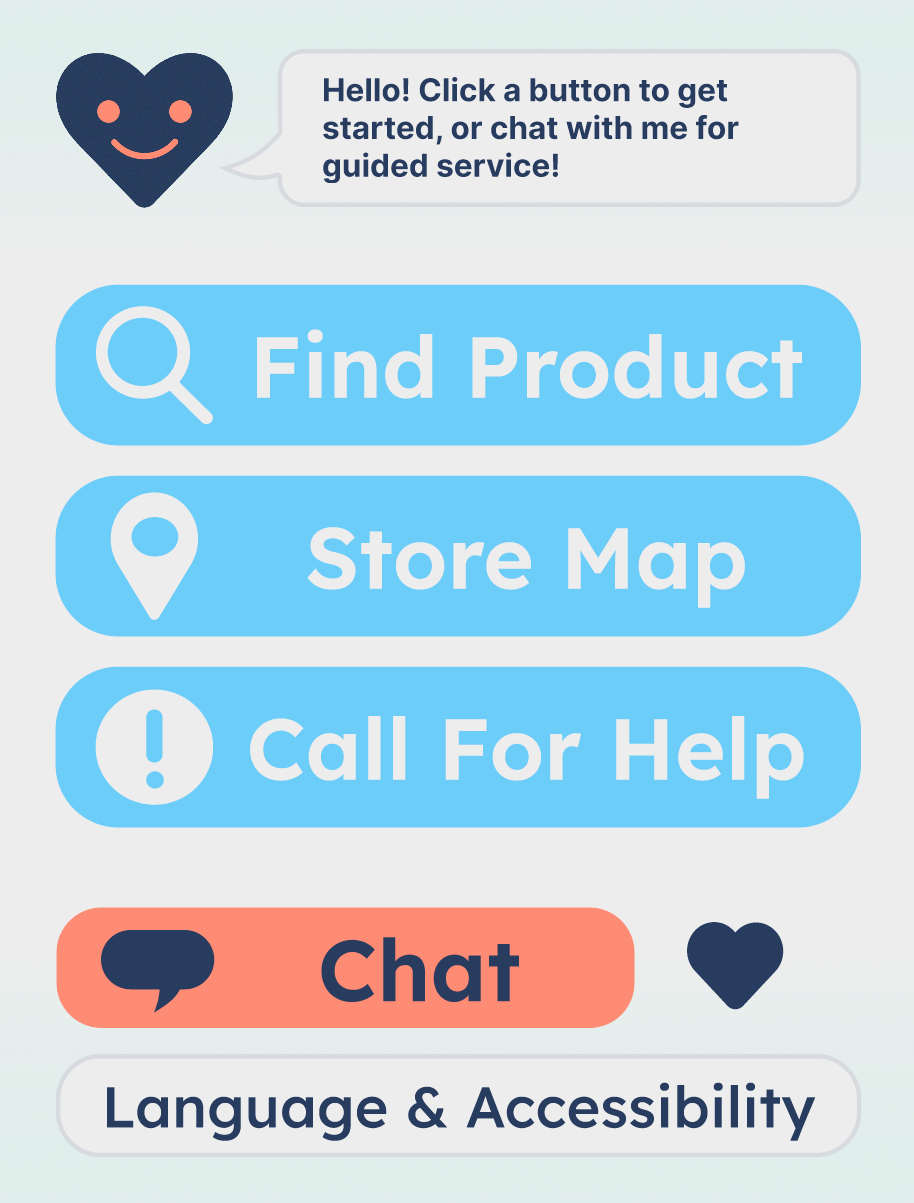
Senti is a mobile, in-store assistant that combines:
Rather than replacing employees, Senti supports a hybrid service model, where automation handles repetitive questions and employees focus on higher-value tasks.
- A navigational interface (store map + product finder)
- An AI chatbot trained in store procedures
- Multilingual support for accessibility
- A human fallback system for complex interactions
key findings
- 106-person employee survey (Target, CVS, Walmart, TJ Maxx)
- 3 in-depth interviews with retail workers
- Desk research on emotional labor and service systems
Employees aren’t just overworked— they’reemotionally overextended.Reducing interaction load can improve both employee wellbeing and customer experience.
research & insights
Methods
Insights
Emotional labor (constant friendliness, responsiveness)is a major stressor
88%
of employees say customer expectationscontribute to burnout
81%
report reduced stress if customer interactionswere partially automated

design approach
1\ Prioritizing Common Tasks
The most frequent customer questions:“Where is this product?”“How do I get to this section?”These became the foundation of the system:Find Product + Store Map
3\ Hybrid Service Model
Research showed users still prefer humans for complexor emotional situations.Solution:Built-in “Call for Help” feature
Smooth escalation from AI → human support
2\ AI as an Interface Layer
Instead of forcing users through menus, Senti allows:Natural language input
Automatic navigation to relevant screens
Context-aware responsesThis reduces friction and supports different user behaviors.
4\ Accessibility & InclusivityMultilingual support for non-English speakers
Highly legible typography (Lexend, Inter)
Large touch targets and simplified layout forquick comprehension
core features
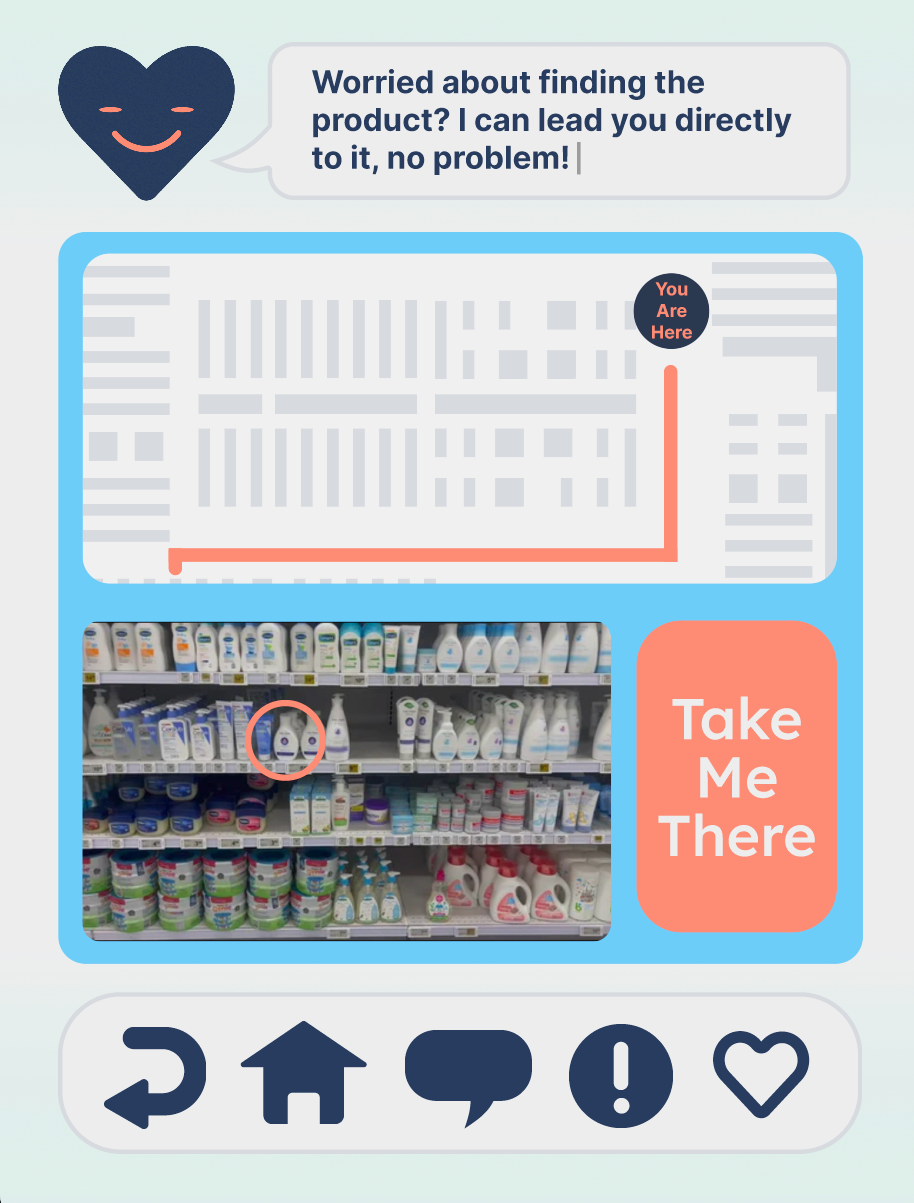
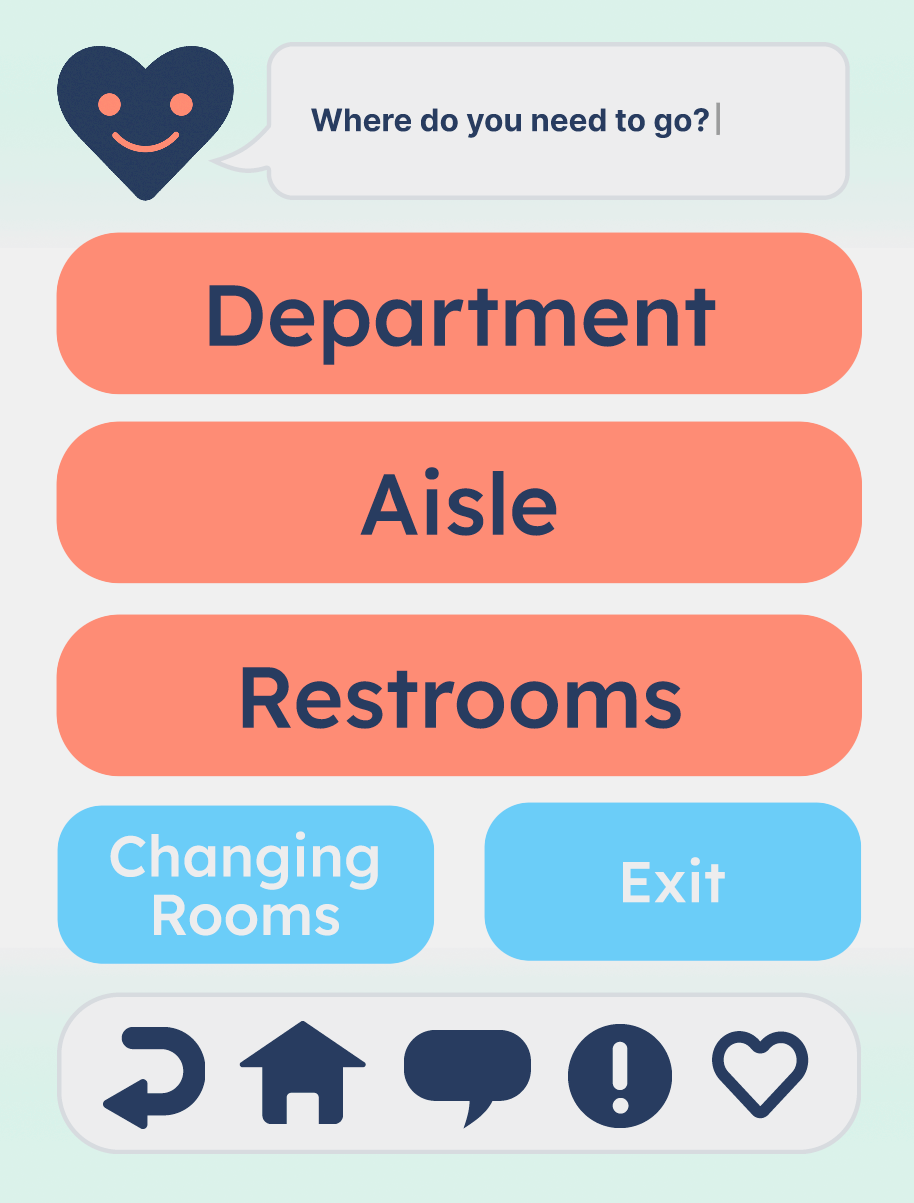
product finder
Displays product location on a store map
Includes real-world aisle imagery
Option for guided navigation
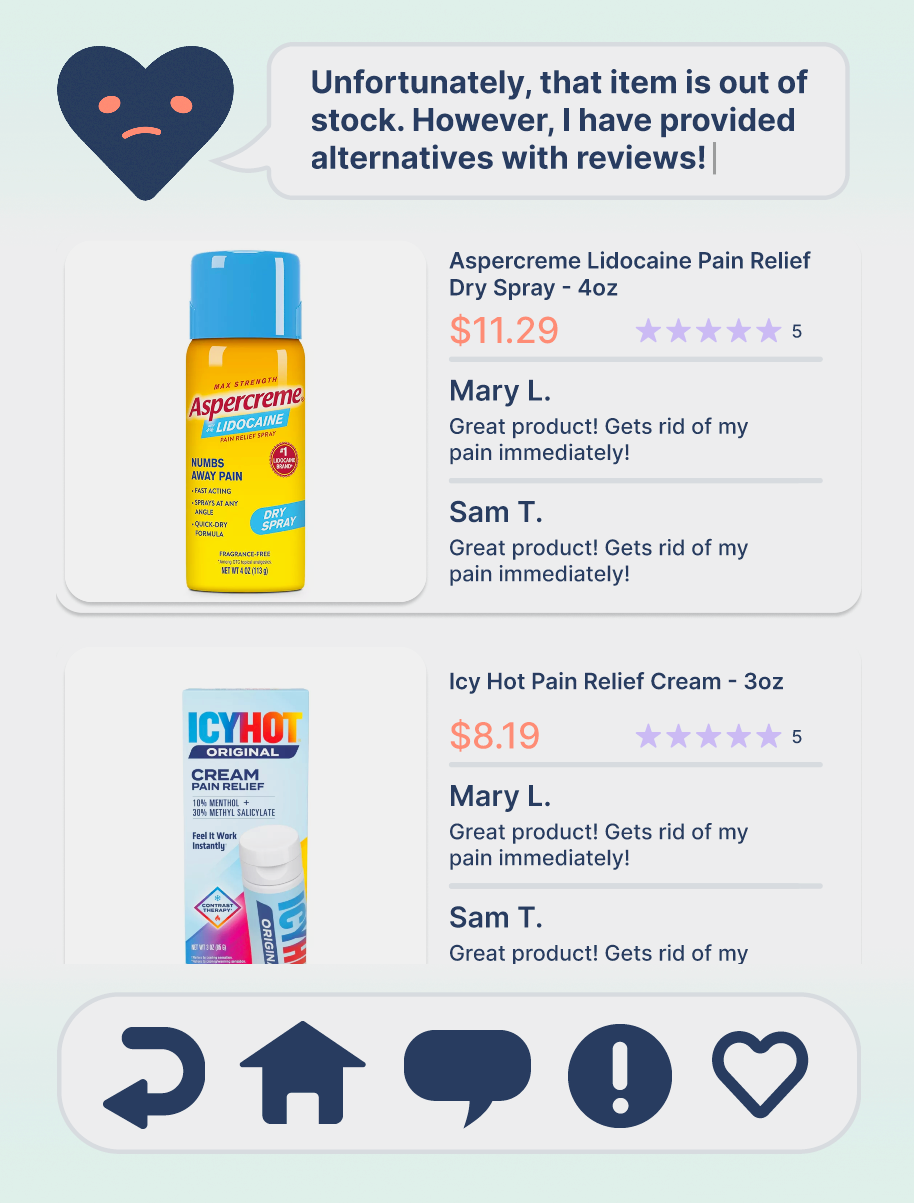
Out-of-Stock Handling
Suggests alternatives
Provides product reviews for informed decisions
Store Map
Simplified navigation to key locations
Designed for both casual shoppers and task-based users(Instacart, etc.)
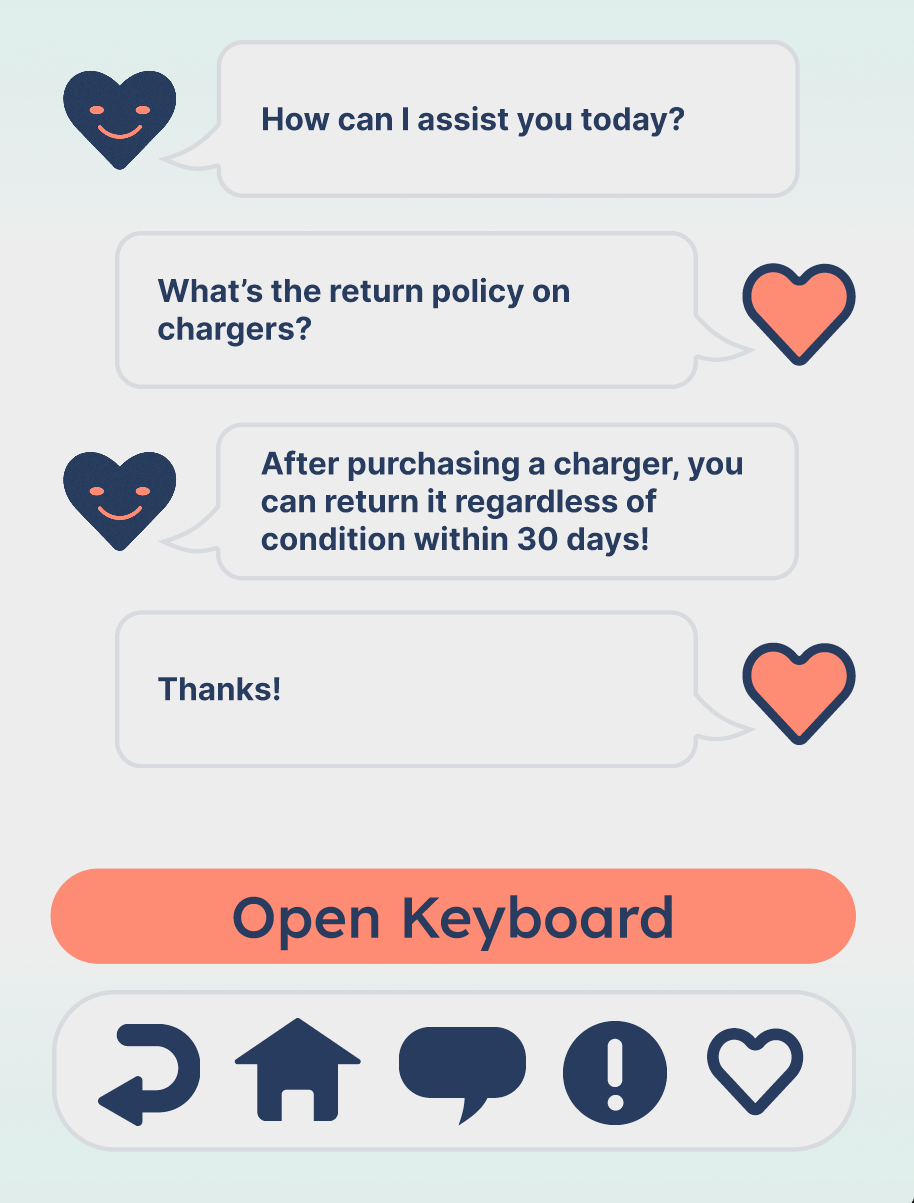
AI Chat
Handles complex or open-ended questions
Can trigger navigation flows automatically
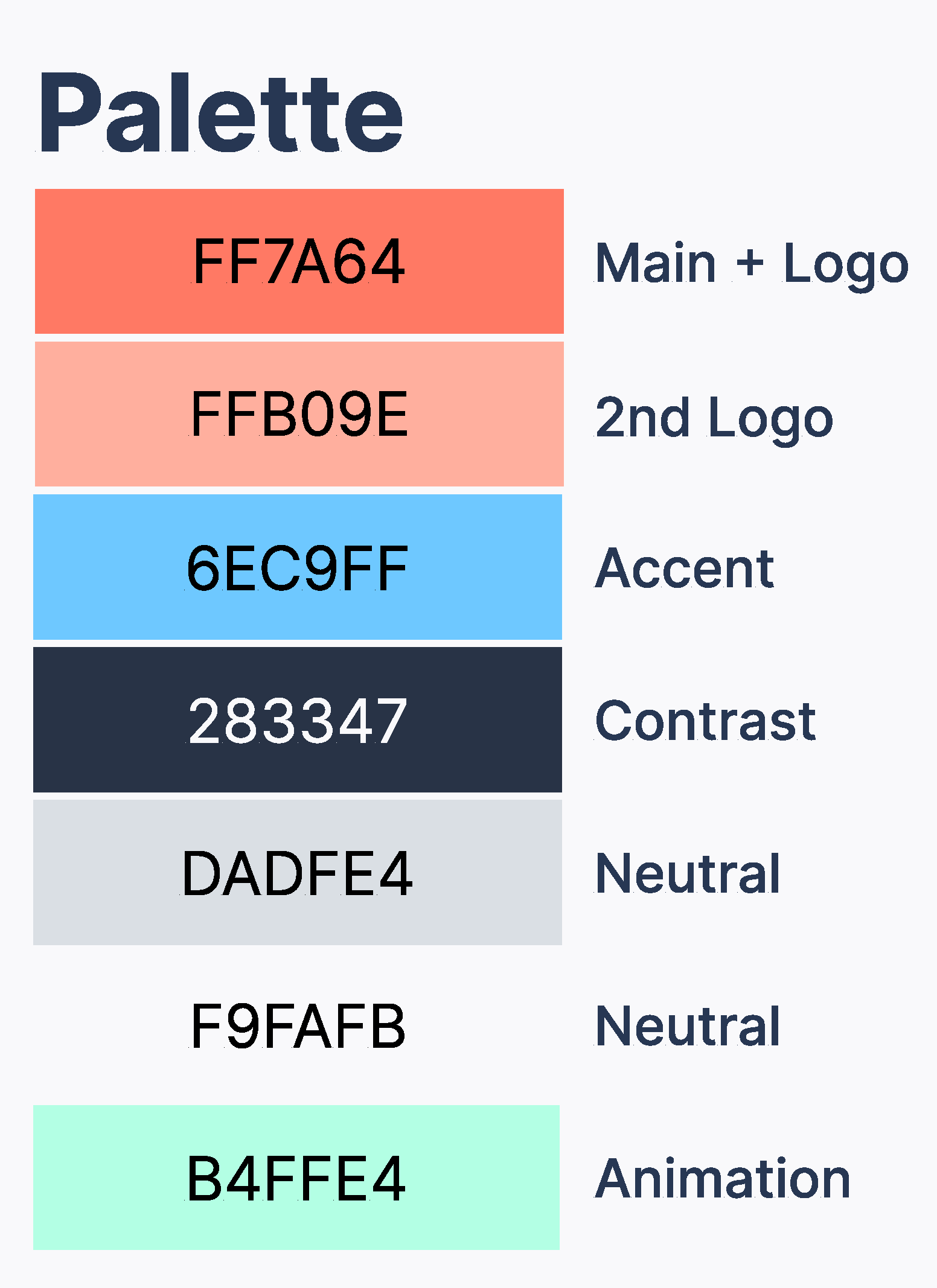
- Cool neutrals and blues → trust, technology
- Mint → clarity and modernity
- Coral accents → warmth and emotional signaling
- A single-column structure
- Large margins and touch targets
- High readability from a distance (kiosk/robot use)
The interface balances futuristic clarity with human warmth:
In my original wireframe, the orientation was landscape. I had some difficulties with keeping elements in consistent, predictable positions, so as part of my refinement I switched to portrait.
The layout uses:
visual system

reflection
This project pushed me to think beyond interface design and into service systems and human behavior. I was particularly interested in how emotional labor shapes user experience— not just for customers, but for employees.
If I were to expand this project, I would further prototype real-world interactions between Senti and users in a physical retail environment, refining how the system behaves inhigh-traffic scenarios.
- Customers receive faster, more consistent support
- Employees are freed to focus on operational tasks
- Service quality improves through reduced cognitiveand emotional strain
final outcome
Senti creates a system where: